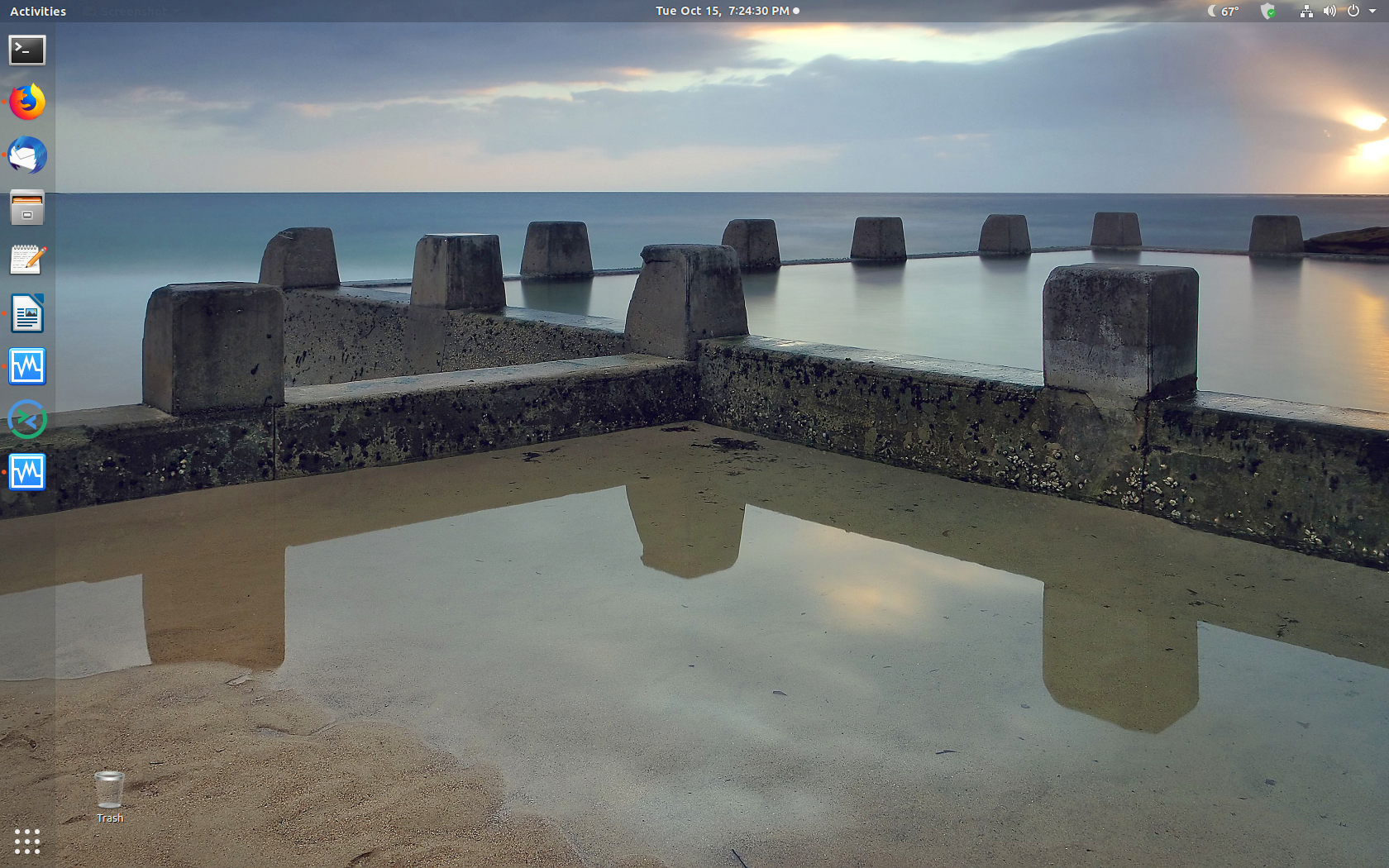


I was a complete beginner when I began playing around with Ubuntu Linux about five Ubuntuyears ago. I started with Version 6.06.1 (Dapper Drake) and recently migrated to the newest version, Natty Narwhal 11.04.  It's installed on what started as an old computer running on my home network.

My Rant

The current version of Ubuntu is 11.10 but I cannot recommend it because Ubuntu has abandoned Gnome2 for the resource hog interface, Unity.  An additional desktop called Gnome3 is also available in Ubuntu 11.10 but it is seriously lacking.  I understand that there is a procedure to allow you to fallback to gnome2 but I know little about it.  Unless Canonical (Ubuntu's parent company) changes their desktop philosophy I have reached the end of my support for Ubuntu.  I intend to continue to use version 11.04 for as long as possible.  11.04 also uses a version of the Unity desktop but it can be easily booted into Gnome2.  I advise new users to avoid Ubuntu 11.10.  In addition, I also strongly advise everyone to avoid Ubuntu upgrades because the process is seriously broken. A much better approach is to back up your /home directory, export your bookmarks, passwords, and email addresses and any other files you wish to retain and do a fresh install of the new version.  Believe me, you'll be glad you did!

An excellent choice for a beginner or anyone for that matter would be Ubuntu 10.04.3 LTS because it is the latest release with long term support.  Download Ubuntu 10.04.3 here.

End of Rant -

I've upgraded that "old" computer a bit since I first threw it together. Linux does not require state of the art processors and gobs of ram.  I believe Ubuntu will run just fine with 512 MB. 

A couple of years ago I built a Ubuntu Server that runs Ubuntu 8.04 Server Edition that serves music that I've ripped from my entire collection of CD's. I also have a few movies on the machine. The server also backs up files on our home network that include another Ubuntu desktop computer that my wife uses and a laptop and another desktop both running Ubuntu Studio. I also sometimes use my Macbook Pro laptop.  

If I find myself needing Windows for a specific Windows only application, I boot into Windows XP using Oracle Virtualbox right from within Ubuntu. This is the most perfect computer I've ever owned. Ubuntu 11.04 is the best version of Linux I've ever run. Anyway, the specs of my Ubuntu desktop computer are as follows:

  • Gigabyte GA-EP45-UD3L motherboard FSB 1333 MHz
  • Intel Core 2 Duo 3 GHz CPU E8400
  • 250 gig Seagate SATA 7200 rpm hard drive
  • EVGA Geforce GT 240 1 GB DDR3 Nvidia Video Card
  • 4 GB G.Skill PC2-8500 DDR2-1066 Dual Channel Ram
  • Onboard 10/100/1000 NIC
  • Lite On CD/DVD RW Combo Drive
  • Logitech wireless keyboard and mouse
  • 22" Acer X223W Widescreen LCD monitor
  • Klipsch speakers
  • Networked HP5 printer
  • Cooler Master Centurion 5 case
  • Thermaltake Purepower 500W power supply
  • Networked with a Ubuntu Linux server running Ubuntu Server 8.04 Version

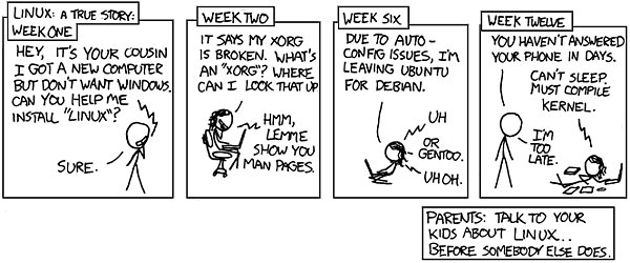
It's Linux - Help!!

By the way, I don't run any antivirus software nor do I use any software firewall with Ubuntu. I've never had any problems because of this. The machine does sit behind my router, which appears to be sufficient.
 My Linux system runs flawlessly and requires no tinkering what-so-ever, although I do play with some visual effects like icons, backgrounds and Compiz. It NEVER CRASHES under any circumstances. For the most part, it does everything that my Windows system does with a lot less attention. No defragging necessary, no viruses, and very quick for what has become "old" hardware.

Ubuntu Software Center

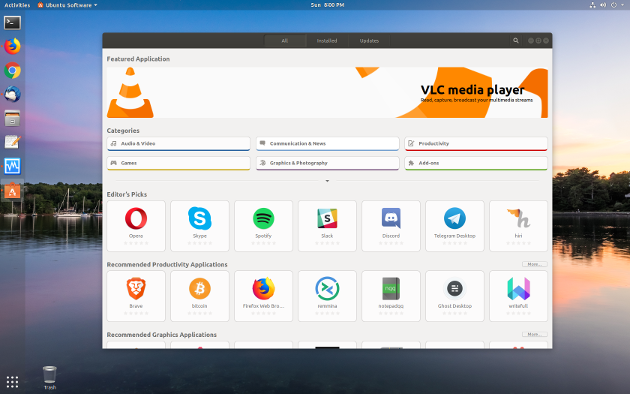
Ubuntu now includes the Software Center. It's now easy for anyone to install programs from the Ubuntu repositories. Just search the categories and click to install. Couldn't be easier!

Ubuntu Software Center

Ubuntu One

Also new is Ubuntu One. Ubuntu gives all users 2 gigabytes on remote storage on their servers for FREE. Additional storage can be purchased. You can back up any sensitive files you might have to this secure remote storage.  Places>Ubuntu One.  Looks like a local folder.  Just drag and drop.

AWN (Avant Window Manager)

If you happen to like the looks of Apple's Application Dock you can have your very own dock in Ubuntu.  If you've seen Apples dock you will noticed the similarities.  AWN is an add-on for Linux that is available from Ubuntu through the repositories.  It's highly configurable and actually offers more options than Apple's dock. To install the path is System>Administration>Synaptic. You can also install via the new Ubuntu Software Center.

Synaptic

If you'd like it to start when you log on add it to your Sessions menu.  The path to Sessions is System>Preferences>Sessions.  You'll get a window that looks something like this;

Sessions

As you can see, I've already added AWN to my Sessions menu. To add a new program, simply click the Add button.  A second window opens up.

Add AWN

Just fill in the Name and Command as shown and when you restart your system AWN will automatically start. The same process is followed for any program you want to start up when you boot.

Conky Hardware Manager

Conky is a lightweight hardware manager that runs on your desktop. It's available either in the Ubuntu Software Center or in Synaptic. It's highly configurable. Like AWN, it can be configured to auto-start at boot. Here's the link to the Conky homepage with much more information.

Sun Virtualbox

Sun Virtualbox is a program that allows you to run other operating systems on your system within what is called a virtual box.  I am currently running Windows XP Pro. This website is done with Microsoft Front Page I am able to do updates to this site from Linux running Windows in a virtual box. For more on Sun Virtualbox please follow this link. There is a version of Virtualbox supplied by Ubuntu in their repositories but I've found the newer version directly from Sun to be superior.  Just make sure you get the version that matches your Ubuntu release. You can download the users manual in pdf form from here.

Ubuntu Brainstorm

Brainstorm is a new site where everyone can submit and vote on ideas for Ubuntu. It's inspired by Dell's Ideastorm. By default, you see the ideas submitted by the community sorted by popularity. Each idea is accompanied by arrows so you can vote it up or down (you have to log in first). You can only click once per idea. So this is an easy way to submit ideas and see what people are really wanting.

Network Printer Set-Up

I had trouble setting up my HP 5P network printer that runs on a HP Jetdirect 300X print server.  I was able to fix this with the help of some folks on the Ubuntu Users Forum. I'm running Ubuntu 8.10. To start with, under "Printing"  I checked "detect LAN printers" and then add new printer. Then I selected UNIX printers LPD.  The host is the fixed address of my printer 192.168.1.XXX, for queue name I entered the name of my print server, HP Jetdirect 300X.  I then selected my HP printer in the next dialogue box, then applied.  Works perfectly!

Ubuntu Tweak

Ubuntu Tweak is an application designed to make configuring Ubuntu easier for everyone. It provides many useful desktop and system options that the default desktop environment doesn't. At present, It is only designed for the Ubuntu GNOME Desktop. It is similar to the Windows Tweak IU program but presently doesn't offer as many options. It is worth downloading and using for some although Ubuntu now offers Configuration Editor that does much the same thing. You can find it in Synaptic or in 9.10's Ubuntu Software Center.

Ubuntu Forums and Ubuntu Geek

I can't say enough about these two sites. Ubuntu Forums is supported by Canonical, the company behind Ubuntu.  Free to join, free to browse, expert users and beginnings post their issues and get solid solutions to whatever their problems may be.  It also a great source for general information.  Ubuntu Geek is another terrific help site. The Geek has many more tips and tweaks that I could ever hope to assemble on this page. I suggest you add it to your favorites.


OpenDNS

OpenDNS is a service providing free, fast name servers. By default, most users are using the name server of their ISP. These name servers can be slow. I wholeheartedly recommended using OpenDNS to speed up your internet. Not just for Linux but for any operating system. The service also provides phishing blocking. Complete installation instructions provided at OpenDNS.

Want to Play Online Poker in Linux?

The best software I've found is Poker Stars. It's runs great. It installs and runs with Wine. You'll need to have Wine installed on your system. In Ubuntu, Wine is available through the Add/Remove Software applet or Synaptic.

Poker Stars Won't Start after Installation/Upgrade of Ubuntu 10.10

Those running Poker Stars through Wine will discover that it will no longer start after upgrading or installing Ubuntu 10.10 (Maverick Meerkat)  This is because Maverick introduced security feature which no longer allows programs to attach to processes. Disabling this consists of two parts;

1. Download package libcap2-bin from Synaptic. This package contains the setcap that disables the security feature in Ubuntu 10.10.

2.  In terminal run;  sudo setcap cap_sys_ptrace=eip /usr/bin/wineserver

Poker Stars will now start and function as before.


Ubuntu


   Copyright 1997-2011 lairdslair All Rights Reserved
   Designed by Shady Character Design & Graphics
   Contact Webmaster